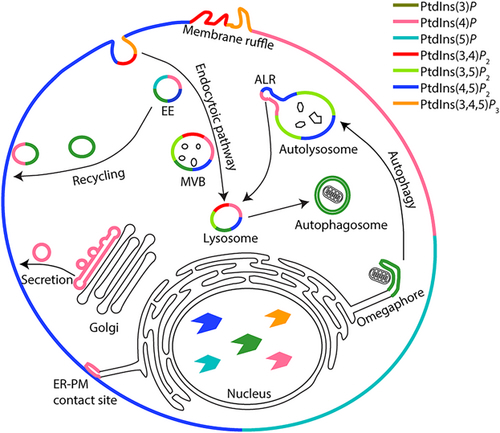
The regulated phosphorylation of phosphatidylinositol (PI) gives rise to seven different species of phosphoinositide (PIP) lipids. PIPs are key regulators of membrane traffic and cellular signaling. PI and PIPs are unique among other phospholipids as they exhibit a remarkable specificity of acyl chains, such that 50–70% of PI/PIPs have an 18:0/20:4 acyl chain profile.
Recent work indicated that the acyltransferase LCLAT1 regulates the incorporation of 18:0 into the sn-1 position of PIPs, and thus contributes to the acyl profile specificity of PIPs.
Current Focus
We are now focused on understanding how LCLAT1 controls the levels and localization of specific PIP species such as PIP2 and PI3P (Chan V et al. MBoC 2024). We aim to understand how the control of PIP species by LCLAT1 can impact growth, proliferation, survival, and invasion in certain types of cancer cells.