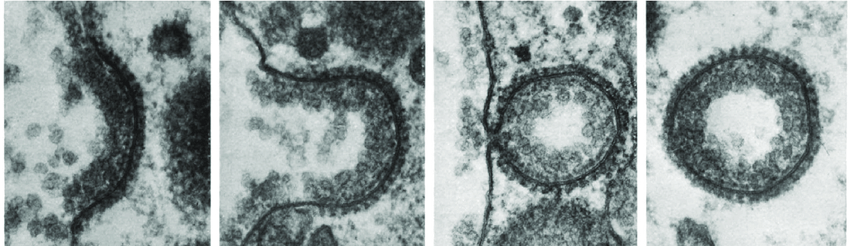
Clathrin-mediated endocytosis is the principal mechanism of internalization of receptor-bound macromolecules into cells. Clathrin-mediated endocytosis controls almost every aspect of a cell's interaction with its environment, from directly mediating the uptake of nutrients, to controlling the surface levels of proteins that mediate adhesion, migration, signaling, and differentiation. As such, clathrin-mediated endocytosis is a fundamental molecular process that impacts almost all aspects of cell physiology.
Clathrin-mediated endocytosis occurs by the assembly of clathrin, adaptors, and many other proteins on the inner leaflet of the plasma membrane, forming structures called clathrin-coated pits (CCPs). CCPs recruit cargo proteins and eventually undergo scission from the plasma membrane to generate intracellular vesicles, allowing subsequent sorting of receptor cargo to various destinations within the cell. Over 50 additional proteins collectively called endocytic accessory proteins regulate CCP formation and clathrin-mediated endocytosis. An important question that remains poorly answered is how clathrin-mediated endocytosis can be modulated or adapted to meet a cell's changing needs and environment, or to meet the needs for internalization of diverse types of molecules.
Key Findings & Ongoing Work
We have uncovered that signals derived from cellular metabolism regulate clathrin-mediated endocytosis and impact the complement of proteins at the cell surface (Ross et al. PLoS ONE 2015). We recently found that dynamic modification of proteins with O-GlcNAc — a post-translational modification responsive to cellular glucose and glutamine — regulates CCP size and receptor internalization (Rahmani et al. JBC 2023). We also found that AMP-activated protein kinase (AMPK), triggered by nutrient scarcity, leads to remodeling of CCP composition to promote recruitment of Arf6 and Dab2, enhancing the recruitment and subsequent internalization of specific cargo including β1-integrin (Orofiamma et al. iScience 2025).