Treatment for many types of cancer involves the systemic administration of various chemotherapies or other drugs. One of the major challenges in treatment of cancer by this approach is achieving selective effects on cancer cells, under conditions that have a more modest impact on healthy cells throughout the body and would thus be compatible with patient treatment. The development of new strategies that can maximize the impact of therapies on cancer cells and limit effects on healthy tissues are very promising to the improvement of treatment outcomes for cancer patients.
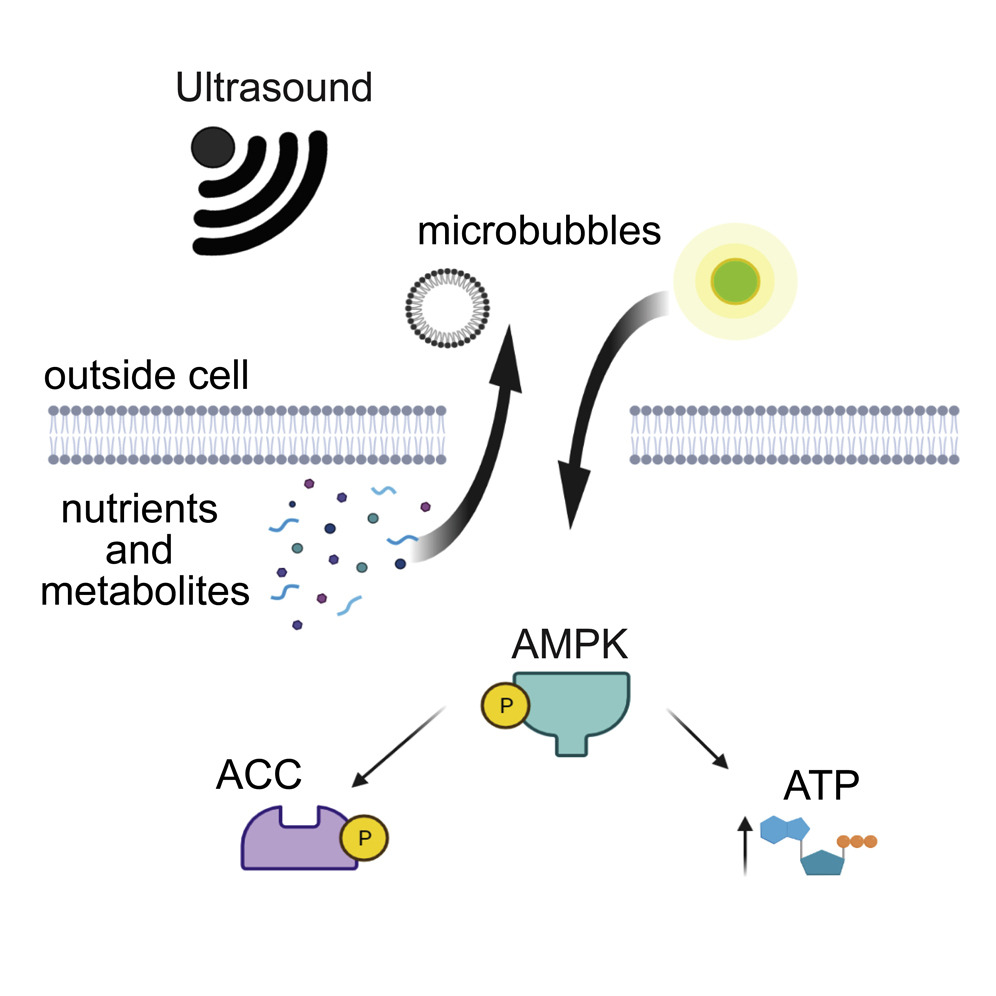
We are working to develop methods using ultrasound and encapsulated gas microbubbles (USMB) for targeted treatment of tumors. USMB elicits killing of cancer cells, but some cells are able to resist this treatment and remain viable. We have recently uncovered that USMB treatment causes broad metabolite depletion in cells, and that metabolic signals involving AMP-activated protein kinase (AMPK) allow a subset of cells to survive following USMB treatment(Lo et al. iScience 2023).
USMB treatment also enhances the intrinsic mechanisms of endocytosis, achieving targeted and selective delivery of existing chemotherapeutic agents into cancer cells, and thus improving patient outcomes for treatment with these drugs (Fekri et al. Scientific Reports 2019).
We are now working to improve our understanding of the effects of USMB treatment on cancer cells to advance this technology as a targeted cancer therapy.